


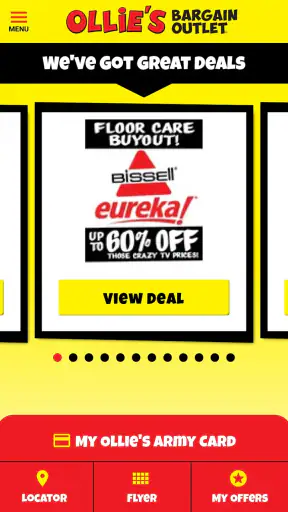
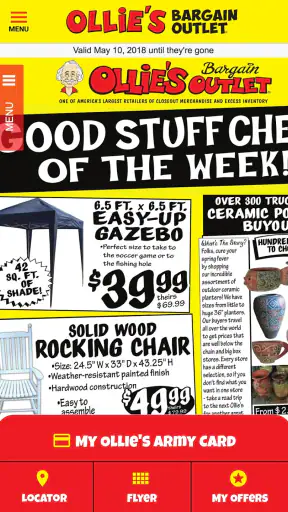
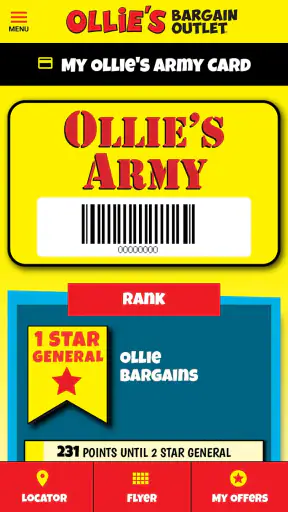
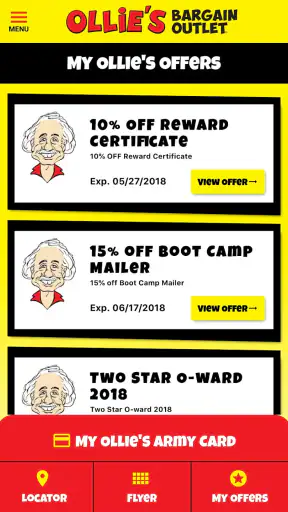
Shopping at Ollie’s is usually about the surprise: one visit might uncover a useful household item, a snack you already know, or something you would never have searched for online. The Ollie’s Bargain Outlet app is built around that same bargain-hunting habit, giving me a way to take a quick look at what the retailer is highlighting before I decide whether a store trip is worth it. I found it most useful as a companion to browsing, not as a complete replacement for walking through the aisles.
That distinction matters. This is a free shopping app from Ollie’s Bargain Outlet Holdings, Inc., and its central appeal is simple: it offers a sneak peek at the retailer’s “Good Stuff Cheap” approach. It does not try to be a universal marketplace or a polished catalog for every possible purchase. Instead, it suits people who enjoy checking deals, planning a visit, and keeping the brand’s bargain-focused identity close at hand.
My overall impression is that this is a practical store companion for curious bargain shoppers, but a less convincing choice if you expect detailed online shopping tools. I would recommend it to someone who already visits Ollie’s or wants an easy way to see what the retailer is promoting. I would be more cautious with someone who wants dependable inventory, extensive product specifications, or a smooth checkout-first shopping experience.
How the app feels in everyday use
The first thing I noticed is how closely the app’s purpose follows the way many people shop at Ollie’s. Rather than beginning with a large, carefully organized online catalog, the experience encourages discovery. That makes sense for a closeout and discount retailer, where the most interesting find is often the item you did not plan to buy.
I can imagine opening it before leaving home, especially when I am already near one of the retailer’s stores. A short browse can help answer a basic question: does today feel like a good day to make the trip? The app is also useful when I want a reminder of the kinds of categories Ollie’s may be featuring, without committing to a full shopping visit immediately.
Still, I would not treat the app as a promise that a particular product will be waiting on a shelf. Bargain retail changes quickly, and the difference between seeing an item promoted and finding it in a specific location is important. My most sensible workflow is to use the app for inspiration and planning, then treat the physical store as the place where the final selection happens.
That workflow gives the app a different role from a standard retailer app. With a conventional online shop, I usually search for an exact product, compare variants, read specifications, and place an order. Here, I am more likely to browse first and decide later. The app works best when I enjoy that uncertainty rather than seeing it as an inconvenience.
A realistic weekend shopping scenario
Imagine that I need inexpensive storage items and a few snacks for the week. Instead of driving directly to Ollie’s with a fixed list, I would open the app while planning the errand. If the featured material looks relevant, I would add the store to a broader trip that already includes other stops. Once inside, I would use the app as a prompt to look beyond the exact items I had in mind.
This approach prevents a common mistake: assuming that a preview is the same thing as a reservation. I would not drive across town for one specific bargain unless I had another reason to visit. The app is more valuable when the trip can still be worthwhile if the featured item has sold out or the available selection differs from what I expected.
For families, that can be a useful compromise. One person can browse the app before the outing, identify a few promising categories, and set a realistic spending limit. The store visit then becomes more focused without losing the fun of finding unexpected deals. For someone who dislikes browsing or wants a guaranteed purchase, the same uncertainty may feel like wasted time.
What the current version tells me
The app’s current version is 1.12.3, and its history reaches back to May 17, 2018. That gives it the feel of an established retail utility rather than a brand-new experiment. It also supports Android devices running version 7.0 or later, which makes it accessible to people using older compatible phones instead of requiring a recent handset.
Its public reception is reasonably healthy: the app holds a 4.1 average from around 4.4 thousand ratings, with roughly 2.1 thousand written reviews. More than a million installs indicate that it has reached a substantial audience. Those figures do not tell me that every user will have the same experience, but they do suggest that the app has remained relevant enough for shoppers to keep using it.
I also appreciate that the app is free and carries an Everyone age rating. That makes it easy to recommend for a shared household device or for a parent who wants to browse store information with a child nearby. The absence of a purchase price lowers the commitment: installing it for a quick look does not require deciding that it will become a daily shopping tool.
How the product has evolved without changing its identity
The version history and long availability point to gradual maintenance rather than a sudden change in purpose. The app remains centered on Ollie’s bargain-shopping experience, so I would not install it expecting a completely different kind of retail platform. Its evolution is better understood as continued support for the same basic habit: preview the retailer’s current appeal, then decide whether to visit.
That continuity is helpful for existing users. Someone who installed it years ago is unlikely to need to relearn the entire idea behind it. At the same time, a stable concept can expose the app’s limits. If you want advanced search, highly detailed product records, or a full online ordering workflow, the app’s long-standing bargain-preview focus may feel narrower than what larger retailers offer.
I find that trade-off reasonable for Ollie’s audience. The retailer’s appeal is not only low prices; it is also the possibility of finding something unusual. A highly rigid digital catalog could actually make the experience feel less distinctive. The app’s challenge is to provide enough useful guidance without pretending that closeout shopping can behave like a perfectly stocked warehouse.
What existing users gain from the latest state
For returning users, the greatest benefit is convenience at the beginning of the shopping process. Instead of relying entirely on memory or making an unplanned trip, I can check the app first and decide whether the retailer’s current focus matches what I need. That small step makes the store visit feel more intentional.
It can also help me separate two kinds of shopping. If I need a precise replacement part or a specific model, I would begin elsewhere, because a bargain-preview app is not the natural tool for that job. If I am flexible about brand, color, packaging, or exact product choice, Ollie’s becomes more appealing, and the app helps me enter that flexible mindset before I arrive.
Another useful habit is to take a quick look before a routine errand rather than opening the app only when I am already in a store. That gives me time to decide whether a detour makes sense. It also reduces the temptation to treat every interesting preview as an urgent purchase, which is especially helpful in a retailer built around impulse-friendly discoveries.
For a regular Ollie’s shopper, this makes the app less about saving a single trip and more about improving timing. I can use it when I have a little room in my schedule, when I am preparing for a household project, or when I want inexpensive ideas rather than a predetermined product. That is a modest benefit, but it is a genuine one.
Where it compares well with ordinary alternatives
The usual alternative is simply visiting the store without checking anything first. The app is better when I want a quick preview and a reason to plan the trip. It adds a small layer of preparation without turning bargain hunting into a complicated research project.
Another alternative is browsing a large online marketplace. That is usually better for exact searches, product comparisons, delivery choices, and repeat purchases. I would choose the marketplace when I know precisely what I want and need confidence that the same item will be available. I would choose Ollie’s when price, variety, and the possibility of an unexpected find matter more than exact matching.
Retail apps from larger chains may also provide deeper account features, more predictable inventory tools, or a stronger online-to-store connection. Ollie’s feels more focused and less ambitious. That can make it easier to understand, but it also means I would not use it as my only shopping app.
The most honest comparison is this: a standard retailer app helps me complete a planned transaction, while this app helps me decide whether a bargain-oriented browsing trip sounds worthwhile. Neither approach is automatically better. The right choice depends on whether I value certainty or discovery for the purchase in front of me.
Small habits that make it more useful
My first tip is to check the app before building the rest of an errand, not after. If the featured selection is relevant, I can combine the store visit with nearby tasks. If it is not, I have avoided making a special trip based only on vague expectations.
Second, I would use the app to create a short mental category list rather than a strict item list. For example, I might look for storage, seasonal supplies, or pantry additions instead of expecting one exact brand. That approach fits the retailer’s changing selection and keeps the preview useful even when individual products are unavailable.
Third, I would set a budget before entering the store. The app can encourage browsing, and browsing is part of the fun, but a preview can also make an unplanned trip feel justified. A spending limit lets me enjoy the discovery without confusing “interesting” with “necessary.”
Finally, I would keep the app’s information in perspective. A preview is most valuable as a planning signal, not as a guarantee of local stock. If the purchase is urgent, I would choose a retailer with more predictable availability. If the purchase is flexible, I would let the app guide my curiosity.
Where the experience still falls short
The central limitation is the gap between digital preview and physical-store reality. A shopper may want to know whether a particular location has a particular item, but bargain retail does not always offer the same certainty as a conventional e-commerce catalog. That can make the app feel less satisfying when I am shopping under time pressure.
I also think the app is less useful for detailed product research. When I need dimensions, compatibility information, ingredient comparisons, or a careful review of alternatives, I usually need more than a promotional glimpse. The app can start my search, but it is not the place I would finish every decision.
Its bargain-focused identity may also frustrate people who prefer a clean, predictable assortment. I enjoy the possibility of finding something unexpected, but another shopper may see changing selection as disorganization. Someone who wants to reorder the same item every month, track a delivery, or compare multiple exact models should probably use a different retail solution.
There is also a practical question of attention. If I already know I will visit Ollie’s, opening the app may add little value on a day when I have plenty of time to browse. Its benefit is strongest when I need help deciding whether to go, what general categories to consider, or how to fit the visit into a larger plan.
Who should install it, and who should skip it
I would recommend it to regular Ollie’s customers, bargain hunters, families planning low-cost shopping trips, and people who enjoy browsing without requiring a precise outcome. It is especially suitable for shoppers who can adapt when a promoted item is unavailable and who see the store visit itself as part of the experience.
I would also suggest it to someone who is curious about Ollie’s but has not yet built a routine around the retailer. Because it is free, the barrier to trying it is low. A few visits can reveal whether the app’s preview style actually helps that person plan errands or simply encourages unnecessary browsing.
I would skip it if my main goal were guaranteed stock, fast delivery, exact product matching, or a complete online checkout workflow. It is also not the right fit for anyone who dislikes closeout-style shopping and wants a stable assortment from one visit to the next. In those cases, a more conventional retailer app will probably save time and reduce uncertainty.
What I would watch as the app continues
For future updates, I would pay attention to how well the app balances inspiration with practical planning. The most valuable improvement would be anything that helps shoppers understand how a preview relates to an actual store visit, without removing the flexible, discovery-driven character that makes Ollie’s different.
I would also watch whether the experience becomes more helpful for repeat customers while remaining simple for occasional visitors. Regular shoppers may want stronger ways to organize their plans, while newcomers need an uncomplicated introduction to the retailer’s bargain-first style. Those goals can coexist, but only if new layers do not bury the quick preview that gives the app its purpose.
For now, I see the current release as a useful but specialized tool. It is not trying to replace every part of shopping, and I do not think it should be judged as though it were a full-scale marketplace. Its value comes from helping me decide when to browse Ollie’s and what kind of mindset to bring into the store.
After using it, my recommendation is straightforward: install it if you enjoy bargain discovery and already have an Ollie’s location that fits your routine. Use it before errands, keep expectations realistic about local availability, and let it suggest possibilities rather than dictate a shopping list. If you need certainty and detailed online purchasing tools, choose a different retailer app. If you want a low-commitment way to take a sneak peek at what Ollie’s is putting forward, Ollie’s Bargain Outlet earns a place on my phone.


